
Cookie Jam Blast™ Match 3 Game
Jam City, Inc.Puzzle
4.556.70K Reviews
- Version
- 13.40.118
- Installs
- 10.00M
- Age Rating
- Everyone
Screenshots
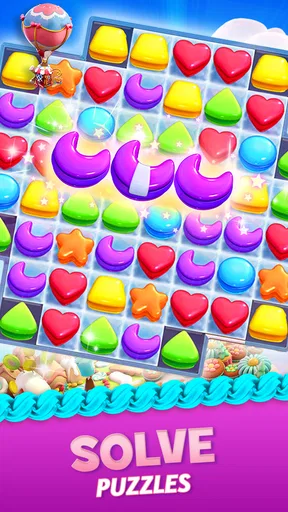

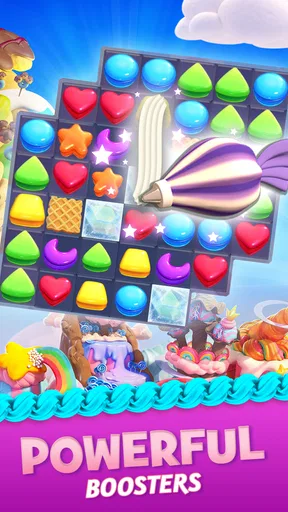

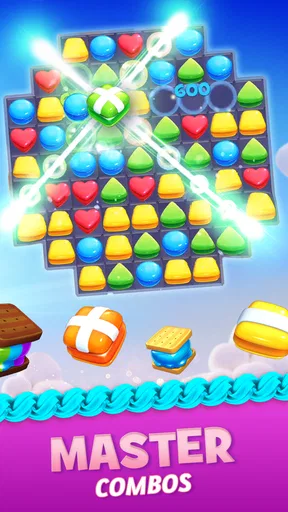
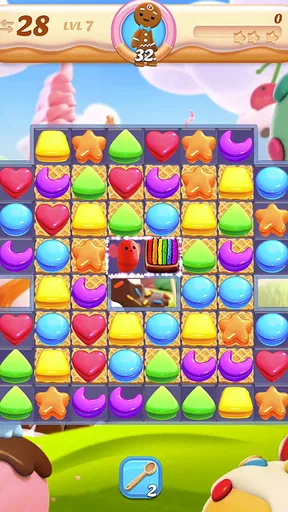
Our Review of Cookie Jam Blast™ Match 3 Game
 Analysis by Appyee
Cookie Jam Blast™ Match 3 Game is the kind of puzzle I can open for a few spare minutes and still feel that I have made progress. Its central idea is familiar—matching colorful pieces to clear a board—but the presentation gives that routine a cheerful, dessert-themed personality. I found it easy to understand almost immediately, yet it still asks me to think about the order in which I make moves rather than simply tapping whatever looks convenient.
Developed by Jam City, Inc., this free puzzle game is aimed at a broad audience and carries an Everyone age rating. It has reached over 10 million installs, with a 4.5 average from around 286 thousand ratings. Those figures make sense to me: the game is approachable, bright, and comfortable for casual sessions, although its free-to-play structure becomes more noticeable the longer I play.
The most important thing to know is that this is not a slow, story-heavy adventure or a demanding strategy game. It is a compact match-three experience built around quick decisions, colorful feedback, and a steady sequence of boards. If you want a relaxing game for a commute, a waiting room, or a short break at home, it is a natural fit. If you dislike repeated puzzle formats, limited attempts, or optional purchases, some of its design choices may wear thin.
A cheerful first impression that gets to the puzzle quickly
My first impression was shaped less by complexity than by clarity. The dessert theme is immediately readable, and the board communicates what matters without forcing me through a long explanation. Pieces are designed to look inviting, while the goal of each turn remains easy to follow. That matters in a casual puzzle game because the best opening is one that lets me start playing before I have to study a manual.
The visual language also makes the game feel lighter than a more abstract match-three title. Cookies, candy, and bright colors create an atmosphere closer to a playful kitchen cabinet than a competitive arena. I do not need to take the setting seriously, and that is part of its appeal. The game understands that many players will use it to switch off mentally rather than to chase a complicated narrative.
At the same time, the friendly look should not be confused with a completely effortless experience. Early boards can teach the basic rhythm, but later decisions depend on recognizing opportunities before making a match. I often found myself pausing for a moment to check whether a simple move would block a better one. That small layer of planning keeps the game from becoming pure visual noise.
The interface is best when I am playing one-handed and paying partial attention. I can make a move, watch the result, and decide whether to continue without losing the thread. That makes it useful in everyday situations where I have only a short window: waiting for food, taking a break between tasks, or sitting on public transport. I would not call it ideal for playing while distracted, though, because an impulsive move can waste a useful arrangement.
One practical tip is to avoid treating every available match as equally valuable. The most obvious combination is not always the most useful one. I get better results when I first look for moves that open space, create a chain, or affect a difficult area of the board. That habit turns the game from a reflex exercise into a small visual-planning routine.
How the dessert setting carries the visual mood
The art direction is coherent because the sweets are not just decoration placed around a generic grid. They give the board a consistent reason to look bright, soft, and celebratory. Colors are chosen to make pieces distinguishable, while the surrounding presentation supports the idea of a playful confectionery world. I never felt that the game was trying to create realism; it is deliberately closer to illustrated candy-shop fantasy.
That choice helps with accessibility for casual players. A serious military or jewel-themed presentation might suggest competition or precision, while Cookie Jam Blast™ feels forgiving before I even make a move. The mood says that a small mistake is part of the fun. Of course, the puzzle can still become demanding, but the art keeps the pressure from feeling severe.
The visual feedback is also important to the pacing. Matches are designed to feel rewarding, and the board’s changes are easy to read after a move. When several pieces clear in succession, the result gives me a satisfying sense of cause and effect: I made a choice, the board reacted, and the next situation is now different. That clarity is more valuable than elaborate decoration in a game I may play repeatedly.
Still, the candy styling has a trade-off. If you prefer restrained interfaces, muted colors, or a strong narrative setting, the constant sweetness may feel repetitive. The same visual identity that makes the game recognizable can also limit its variety. I enjoyed the consistency, but I would not choose it for a changing world or a deep sense of place.
Sound and rhythm make short sessions feel complete
The sound design works as a companion to the visual feedback rather than trying to dominate it. The game’s mood depends on the sensation that each match has a pleasant response, and the audio helps reinforce that rhythm. A move feels more finished when the clearing action has both a visible and audible payoff.
I especially noticed how this supports short sessions. I can play without needing to settle into a long soundtrack or follow dialogue. The experience has a light arcade pulse: choose, clear, react, reassess. That rhythm makes it easy to stop after a board or continue for longer when I have time.
For quiet public places, I would keep the device volume low or use headphones, because repeated feedback can become noticeable during extended play. The game remains understandable without depending on sound, which is useful when I am playing silently. Turning audio down does not remove the core experience, although it does make the chain reactions feel slightly less celebratory.
The pacing is strongest when the board gives me enough time to inspect it before committing. I enjoy the balance between immediate response and a brief pause for thought. It avoids the frantic feel of a timed arcade puzzle while still keeping the session active. That makes it more suitable for relaxation than games that demand constant speed.
Where the match-three mechanics fit—and where they do not
At its core, this is a classic match-three game, so the basic interaction is familiar to anyone who has played the genre. The challenge comes from arranging moves so that one match leads to a more useful result. I like that the game rewards looking beyond the first possible combination, especially when a move can set up a larger clearing sequence.
The mechanics fit the cheerful presentation because they are easy to learn and visually expressive. A successful move produces a clear payoff, while a less effective move teaches me to inspect the board more carefully next time. There is no need to understand a complicated character system or memorize a large set of rules before enjoying the puzzle.
My most useful approach is to scan the entire board before touching anything. I look first for combinations that can affect several areas, then for moves near obstacles or restricted spaces, and only afterward consider ordinary matches. This is a small change, but it prevents me from spending the best move on a harmless corner. I also try not to trigger a chain immediately if waiting can create a stronger setup.
Another trade-off is the relationship between luck and planning. Board layouts can create favorable or awkward situations, and not every unsuccessful attempt feels like the result of a poor decision. That is normal for this type of game, but it matters if you want complete control over the outcome. I appreciate the occasional surprise, though players who prefer pure logic puzzles may find the match-three format less satisfying.
Compared with a minimalist puzzle game, this one offers more atmosphere and reward feedback but less mechanical purity. Compared with a story-driven mobile game, it asks for much less time and attention. Its place is between those alternatives: more expressive than a bare grid, more immediately playable than a large adventure, and more repetitive than either if you are looking for constant novelty.
The game is free to download, but in-app purchases range from $0.99 to $299.99 per item. I consider that an important part of the decision, even though a player can begin without paying. Optional purchases can make the experience more convenient, but I would set a personal spending limit before playing regularly. The game works best for me when I treat purchases as unnecessary extras rather than as part of the basic price of entry.
That free-to-play structure also affects who should skip it. If you want a one-time purchase with a fully predictable progression, this is not the most comfortable choice. I would instead look for a premium puzzle game with no recurring pressure. On the other hand, if you enjoy trying a game before deciding whether it deserves your money, the free starting point is useful.
Progression, patience, and the everyday use case
In daily use, I found the game most effective as a reset between demanding activities. After answering messages or finishing a repetitive task, a few boards give my attention something simple to organize. The limited scope helps: I am not expected to remember a large plot or maintain a complicated build. I can return later and understand what I am doing almost instantly.
It also works well for players who enjoy gentle goals. Clearing a board gives a clear sense of completion, while a difficult layout encourages another attempt. That loop can be motivating without requiring a long uninterrupted session. I would recommend it to someone who likes puzzles but does not want to spend an hour learning a new system.
However, patience becomes more important as the game continues. A player who rushes every move may feel that progress is inconsistent, while someone willing to study the board can get more from the same mechanics. I would not describe it as a pure relaxation tool because some stages can still create frustration. The bright art softens that feeling, but it does not eliminate it.
The current version is 13.40.118, and the game supports devices running Android 7.0 or later. That makes it relevant to people using older Android hardware, although the overall experience will still depend on the phone or tablet. On a small screen, I prefer to play with the device held steadily because examining pieces and planning a chain is easier when the board is not moving in my hand.
Who gets the most from this particular puzzle game
I would recommend it to casual players who want a recognizable match-three format with a strong dessert identity. It is especially suitable for short breaks, family-friendly play, and anyone who enjoys visual rewards after a simple but thoughtful move. The Everyone rating also makes its tone broadly approachable, with no need for a darker setting or mature subject matter.
It is less suitable for someone searching for a deep story, a competitive multiplayer focus, or a puzzle system that changes dramatically from one session to the next. The game’s charm comes from refining a familiar formula, not reinventing it. Players who already feel tired of candy-themed match-three boards may not find enough difference in the presentation to change their mind.
I would also skip it if you are easily tempted by optional spending or dislike systems that may encourage continued play. Free access is convenient, but convenience and restraint are not the same thing. Going in with a clear boundary—such as playing only when you have time and never buying impulsively—makes the experience easier to enjoy on its own terms.
For comparison, a traditional standalone puzzle offers cleaner boundaries and usually less pressure around continued sessions. A large match-three competitor may provide a broader sense of progression or a more elaborate cast of characters. Cookie Jam Blast™ wins when I want immediate access, a unified confectionery mood, and puzzles that can be understood in seconds. It loses when I want a calmer purchase model or a more varied long-term structure.
The atmosphere verdict after extended play
What holds the game together is the agreement between its parts. The candy visuals make the board feel playful, the sound gives each match a pleasant punctuation, and the pacing leaves room for both quick reactions and modest planning. None of these elements tries to become more important than the puzzle. Instead, they support the same promise: a light, colorful break built around one move at a time.
That coherence is the reason I kept returning. The game does not need a complicated setting to create a recognizable mood. Its world is communicated through color, shape, sound, and the cheerful rhythm of clearing pieces. When I want something more demanding, I notice the limits of the formula; when I want a compact diversion, those same limits become part of its convenience.
Jam City, Inc. has made a free puzzle game that understands its audience and keeps the entry barrier low. The large player base—over 10 million installs and around 57 thousand written reviews—reflects how accessible the format is, while the purchase range means I would still approach it thoughtfully. It is polished enough to recommend, but not so different from the usual match-three alternatives that every player will find it fresh.
My final recommendation is straightforward: try it if you want a friendly, dessert-themed puzzle for flexible sessions, and judge it by how comfortable you are with its repeated board structure and optional spending. I enjoy it most when I slow down, scan for the move that changes the board rather than the move that merely clears pieces, and stop before the routine becomes tiring. Its strongest quality is the way art direction, sound, and pacing turn familiar mechanics into a consistent playable mood.
Verdict
Strengths of Cookie Jam Blast™ Match 3 Game
- Bright, polished graphics make the board easy to read.
- Frequent events add variety beyond the regular level path.
- Power-ups can clear difficult layouts quickly when used strategically.
- Short levels suit quick play sessions during commutes or breaks.
- The game is simple to learn, even for casual match-3 players.
Limitations of Cookie Jam Blast™ Match 3 Game
- Some later levels rely heavily on lucky tile combinations.
- Lives can run out quickly during repeated failed attempts.
- Boosters may feel scarce unless you save them carefully.
- The number of pop-ups can interrupt the flow between levels.
- Progress may feel slow for players who avoid optional purchases.
Other Releases by Jam City, Inc.
View All
Bubble Shooter: Panda Pop!
Puzzle4.7

Cookie Jam™ Match 3 Games
Puzzle4.6

Harry Potter: Hogwarts Mystery
Adventure4.6

Genies & Gems - Match 3 Game
Puzzle4.7
Similar Picks in This Category
View All
Block Blast!
HungryStudio4.8

Braindom: Brain Games Test
Lahana Game Studio4.6

AMAZE!
CrazyLabs LTD4.6

Sudoku - Classic Sudoku Puzzle
Oakever Games4.7

Art Puzzle - Puzzle Games
Easybrain4.8

Amaze GO!
Oakever Games4.9
Frequently Asked Questions
What is Cookie Jam Blast™ Match 3 Game?
Cookie Jam Blast™ is a colorful match-3 puzzle game built around cookies, cakes, pastries, and other sweet treats. You complete levels by matching three or more identical pieces, while special combinations can clear larger areas of the board. The game also includes objectives, boosters, obstacles, and progressively more challenging stages, making it suitable for short sessions or longer puzzle-playing sessions.
Is Cookie Jam Blast™ free to download and play?
Yes, Cookie Jam Blast™ can generally be downloaded and played for free on compatible Android and iOS devices. However, the game may include optional in-app purchases for coins, boosters, extra moves, or other helpful items. Progress can usually be made without spending money, although difficult levels and limited lives may encourage some players to consider purchases. Check the store listing for current pricing and availability.
Does Cookie Jam Blast™ require an internet connection?
Some parts of Cookie Jam Blast™ may work without a continuous internet connection, allowing you to play certain puzzle levels when offline. Nevertheless, an internet connection may be needed for advertisements, in-app purchases, account synchronization, events, updates, rewards, and other online features. Availability can vary by device and game version, so it is best to launch the game online before traveling or playing without reliable connectivity.
Are there ads and in-app purchases in Cookie Jam Blast™?
Cookie Jam Blast™ may display advertisements and offers for optional in-app purchases. Ads can sometimes provide rewards or appear between stages, while purchases may include virtual currency, extra lives, boosters, and other conveniences. You do not normally need to buy anything to start playing, but the game uses a lives-and-retry system that can make purchases attractive during difficult levels. Parental controls are recommended on shared devices.
Is Cookie Jam Blast™ suitable for children and what devices support it?
Cookie Jam Blast™ uses bright cartoon graphics, simple touch controls, and easy-to-understand matching mechanics, so it can appeal to children as well as adults. However, the presence of advertisements, social or promotional features, and optional purchases means parents should review the store rating and configure device restrictions. Compatibility depends on the operating system version, available storage, and the requirements listed on the official Google Play or App Store page.
Play our best games!


